
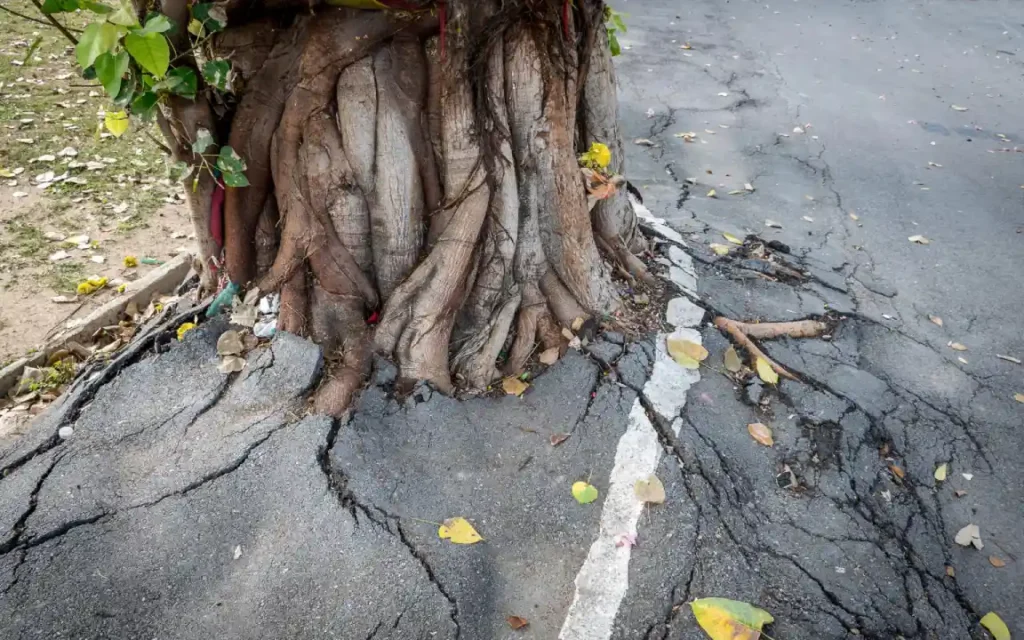
Trees add privacy, structure and long-term value to a garden. But when they are planted close to a house or left unmanaged for years, homeowners often begin to worry about roots affecting foundations, drains or boundary walls.
The concern is understandable. Searches for tree roots damaging property and tree roots and subsidence have increased across the UK. For homeowners in Bournemouth and across Dorset, coastal weather patterns and mixed soil types add another layer of uncertainty.
The key is knowing how to assess the situation properly before jumping to removal. Not every crack is subsidence. Not every nearby tree is a structural threat. This guide explains what actually causes root-related damage, how to check for warning signs, and when professional advice is necessary.
Can Tree Roots Really Damage Foundations?
In the UK, tree roots rarely “break through” solid concrete foundations. The more common issue is indirect movement caused by soil moisture changes.
On shrinkable clay soils, roots draw moisture from the ground. During extended dry periods, the soil contracts. When rain returns, it expands. Over time, this shrink–swell cycle can contribute to subsidence in properties with shallow foundations.
This is particularly relevant in parts of Dorset where clay content varies between neighbourhoods. Older homes, especially those built before modern foundation standards, are generally more susceptible than newer properties.
If you are already researching signs a tree should be removed, it is important to understand that removal is only justified when clear evidence links the tree to structural movement.
Early Signs of Possible Root-Related Damage
Before assuming the worst, start with observation.
Common structural warning signs include:
- Diagonal cracks appearing around windows and doors
- Cracks that gradually widen over time
- Doors or windows sticking without humidity changes
- Sloping floors or gaps between skirting boards and walls
Hairline plaster cracks are normal in many homes. What matters is progression. If a crack increases in width over several months, particularly after dry weather, it may indicate ground movement.
If you have already read about when a tree should be removed, you will know that timing decisions should be evidence-based, not reactive.
Tree Roots and Drain Damage
Roots are naturally drawn to moisture. If underground drains or pipes develop small cracks or loose joints, roots can enter and expand inside them.
Signs of root intrusion in drains may include recurring blockages, slow drainage, unpleasant smells or localised sinking above pipe runs.
In these cases, arranging a CCTV drain survey is often more appropriate than immediately considering tree removal services. Pipe repairs may resolve the issue without removing a healthy tree.
A measured diagnosis protects both your property and unnecessary costs.
How Soil Type in Dorset Affects Risk
Soil conditions are one of the most overlooked factors in root-related damage.
Clay soils shrink when dry and expand when wet. Sandy soils, by contrast, drain more freely and are less prone to movement. Coastal conditions in Bournemouth can accelerate drying during warm periods, increasing seasonal soil fluctuation in some areas.
Professional assessments often refer to standards set by organisations such as the Royal Institution of Chartered Surveyors, which provide guidance on identifying structural movement and subsidence.
Understanding your local soil type provides context before making decisions about removing a tree near your house.
How Close Is Too Close?
There is no universal safe distance between a tree and a property. Risk depends on several variables:
- Tree species and mature size
- Water demand
- Soil composition
- Foundation depth
- Age of the building
Large, high water-demand species planted close to shallow foundations on clay soil present higher risk. Smaller ornamental trees further away usually do not.
This is why professional tree inspections are valuable. They assess the individual situation rather than relying on generic online rules.
How to Check for Tree Root Damage Properly
If you are concerned about potential damage, take a structured approach:
- Monitor cracks over time and measure their width.
- Photograph changes to track progression.
- Note whether issues worsen during dry spells.
- Arrange a drain survey if blockages are present.
If cracks continue to widen or structural movement is suspected, consulting a qualified arborist or structural surveyor is advisable.
Experienced professionals, including members of the Arboricultural Association, follow recognised industry standards when assessing root systems and structural risk.
If subsidence is confirmed, you may need guidance on tree surgery vs tree removal to determine the most appropriate solution.
When Removal May Be Necessary
Tree removal should never be the default reaction. It becomes necessary when:
- Structural surveys confirm subsidence linked to moisture extraction
- Severe root intrusion repeatedly damages drainage systems
- The tree presents additional safety concerns
In some cases, controlled root management or targeted pruning can reduce risk without full removal. This is where informed discussion about professional tree surgery becomes relevant.
If removal is required, checking local planning rules is essential. Trees in certain parts of Dorset may be protected by local authority regulations. Guidance from Dorset Council may apply if the tree is within a conservation area or subject to a Tree Preservation Order.
Insurance and Liability Considerations
Many homeowners ask whether insurance covers root-related subsidence. Most building insurance policies include subsidence cover, but insurers typically require professional reports confirming cause.
If a neighbouring tree is suspected of causing damage, liability questions can become complex. Evidence from qualified surveyors and arborists is usually required before responsibility can be determined.
This reinforces why documented professional assessment is important before undertaking removal of a potentially problematic tree.
Avoiding Overreaction
A common mistake is removing a tree based purely on fear. Mature trees provide environmental value, privacy and long-term landscape stability. Removing one unnecessarily can alter soil moisture balance and even cause heave in some conditions.
Equally, ignoring early structural warning signs can lead to more expensive repairs later.
Balanced decision-making requires observation, evidence and professional input where needed.
Final Thoughts
Tree roots do not automatically mean structural damage, but ignoring early warning signs can lead to costly repairs. The difference between a manageable issue and serious subsidence often comes down to early assessment and informed decisions.
If you are noticing cracks, drainage problems, or simply feel unsure about a tree close to your home, the safest next step is a professional inspection. Getting clarity now can prevent unnecessary removal, avoid insurance complications, and protect your property long term.
For homeowners in Bournemouth and across Dorset, Tree Soulution provides clear, practical advice backed by local experience. Whether you need an expert assessment, guidance on risk, or safe tree removal if required, their team can help you move forward with confidence.
Contact Tree Soulutions today to arrange a site visit and get a straightforward answer about your tree and your property.
Frequently Asked Questions
Can tree roots damage house foundations in Bournemouth?
Yes, but usually indirectly. In parts of Bournemouth where clay soil is present, tree roots can draw moisture from the ground. This may cause soil shrinkage during dry periods, which can contribute to subsidence in older properties.
How do I know if tree roots are causing subsidence in Dorset?
Look for diagonal cracks around doors and windows, cracks that widen over time, or doors sticking without humidity changes. A structural survey and professional tree inspection are needed to confirm whether roots are the cause.
Are certain trees more likely to cause root damage in the UK?
Yes. Large, fast-growing trees with high water demand can increase the risk on clay soils. Risk depends on tree size, distance from the property, soil type, and foundation depth.
Can tree roots damage underground drains?
Yes. Roots can enter cracked or loose drain joints and cause repeated blockages. A CCTV drain survey can confirm root intrusion before deciding on tree removal.
Should I remove a tree close to my house as a precaution?
Not automatically. Many trees near properties cause no structural issues. Removal should only be considered if professional evidence links the tree to foundation movement or drainage damage.
Does home insurance cover tree root damage in Dorset?
Most buildings insurance policies include subsidence cover, but insurers usually require professional reports confirming the cause before approving a claim.
Who should assess possible tree root damage?
A qualified arborist can assess the tree’s condition and root behaviour. If structural movement is suspected, a chartered surveyor should also inspect the property.