If a tree on your property has been damaged by a storm, first keep people clear of the area, check for leaning or exposed roots, avoid cutting large branches yourself, photograph the damage, and arrange a professional assessment if structural risk is present. Trees can remain standing after root plate movement or internal splits, so early evaluation is often safer than waiting.
Immediate Safety Checklist After Storm Damage (First 10 Minutes)
Before doing anything else:
- Keep people, pets and vehicles outside the target zone (the area the tree could fall into).
- Look for root plate movement or heaving soil around the base.
- Check for visible compression cracks or structural splits in the trunk.
- Avoid standing beneath hanging limbs or partially detached branches.
- Check carefully for contact with overhead cables.
- Take clear photographs from a safe distance for insurance documentation.
Storm damaged wood behaves unpredictably. Branches under tension can shift suddenly, particularly where wind has twisted the canopy.
How to Assess the Severity of a Storm Damaged Tree
Not all storm damage carries the same level of risk. Separating minor canopy loss from structural instability is the key first step.
Minor Damage (Cosmetic Canopy Loss)
This may include:
- Small broken limbs scattered on the ground
- Light foliage loss
- No visible lean
- No exposed roots
In these cases, the tree may simply need light pruning and monitoring. A professional inspection can confirm stability, but urgent action is rarely required.
Moderate Damage (Structural Weakness Possible)
Warning signs include:
- A large partially detached branch
- A split at a main branch union
- Visible included bark weakness
- Noticeable crown imbalance
These issues increase the risk of secondary failure, where a weakened section fails days or weeks later. Professional assessment is advised to determine whether selective reduction or bracing is appropriate.
Severe or Emergency Damage (Immediate Risk)
This includes:
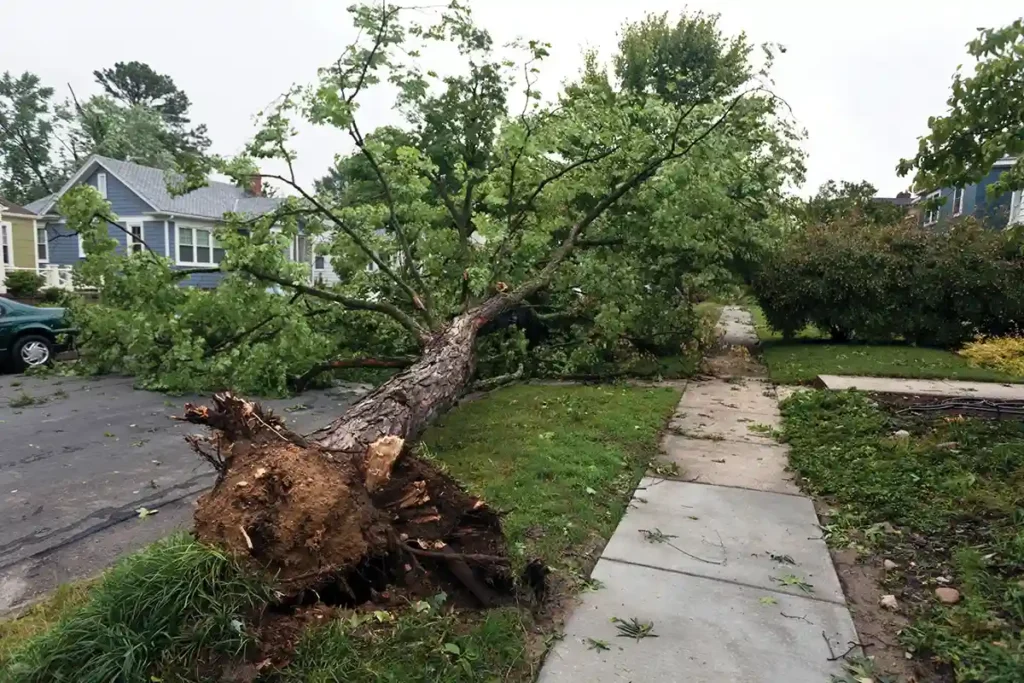
- The root plate lifted or soil clearly heaving
- A tree leaning towards a house, fence or parked vehicle
- A significant structural crack through the trunk
- An uprooted tree
- Contact with utility lines
- Obstruction of a public footpath or road
In these situations, keep clear and seek urgent professional assistance. Immediate safety is the priority.
Why Trees in Bournemouth Are Vulnerable After Coastal Storms
Bournemouth’s coastal exposure plays a role in how trees respond to severe weather. High winds increase the wind sail effect, particularly on mature garden trees with broad canopies.
When combined with soil saturation after heavy rainfall, root stability can reduce significantly. Dorset’s variable soil types and localised high water table conditions can allow roots to shift without the tree immediately falling.
This is why some trees appear stable after a storm but fail days later. Root plate instability does not always result in instant collapse.
Is a Leaning Tree After a Storm Always Dangerous?
Not always. Some trees develop a slight lean over time without structural compromise.
However, a new or worsening lean after a storm deserves attention. It may indicate:
- Root plate instability
- Soil displacement
- Structural load redistribution
A progressive lean, especially when combined with exposed roots or cracking soil, increases the likelihood of delayed failure.
Can a Partially Uprooted Tree Recover?
Recovery depends on the extent of root severance and displacement.
If the root plate has significantly shifted or lifted, structural stability is often compromised. While some trees can be stabilised, severe root movement reduces long-term viability.
Professional evaluation is essential before assuming a tree can safely remain.
Can You Cut a Fallen Branch Yourself?
Small branches already on the ground may be manageable with appropriate tools and caution.
However, branches still attached or under load present serious risk. Storm damaged wood often contains tension wood and areas under compression loading. Cutting without understanding these forces can cause sudden snap-back movement.
Chainsaw use without training adds further danger. In addition, improper cutting may affect insurance claims or create liability exposure if further damage occurs.
If in doubt, leave larger or suspended branches to a qualified arborist.
What If the Tree Is Protected by a TPO or in a Conservation Area?
Storm damage does not remove legal protections.
Trees covered by a Tree Preservation Order (TPO) or located within a conservation area remain protected. However, there is allowance for genuine emergency work where there is an immediate safety risk.
Key points:
- Only carry out proportionate work necessary to remove the risk.
- Document the damage clearly with photographs and dates.
- Keep records explaining why action was required.
- Avoid excessive removal beyond what safety demands.
In Bournemouth, tree protection falls under Bournemouth, Christchurch and Poole Council. Clear documentation helps support reasonable decisions.
Who Is Responsible If a Tree Falls After a Storm?
A common misconception is that storms remove responsibility. They do not.
Homeowners have a duty of care to manage foreseeable risks on their property. If warning signs such as root plate movement, severe leaning or structural splits were visible and ignored, liability questions may arise later.
This does not mean every damaged tree must be removed. It means reasonable steps, including seeking advice, should be taken when risks appear.
Should You Contact Your Insurer or a Tree Surgeon First?
Safety comes first.
If the tree poses immediate risk, arranging a professional assessment is usually the priority. Clear documentation and photographs support any subsequent home insurance claim.
Most policies cover sudden storm damage, though insurers may appoint a loss adjuster to assess claims. Avoid undertaking major removal work without proper assessment, unless immediate danger requires proportionate emergency action.
What Happens During a Professional Storm Damage Assessment?
A thorough on-site evaluation typically includes:
- Visual structural stability inspection
- Assessment of root plate movement
- Evaluation of trunk integrity and branch unions
- Target zone analysis to determine potential impact areas
- Consideration of soil saturation and drainage
The outcome may range from monitoring advice to crown reduction, temporary stabilisation, or full removal. The aim is to balance safety, tree health and proportionate intervention.
How Quickly Should Storm- Damaged Trees Be Dealt With?
Time sensitivity depends on severity.
Minor canopy damage can often be monitored. Moderate structural concerns should be assessed promptly. Severe instability, particularly with root plate lift or major leaning, requires urgent attention.
Delaying assessment where there are visible structural indicators increases the risk of secondary structural failure.
Emergency Tree Removal in Bournemouth – When Immediate Action Is Required
Immediate response is appropriate where:
- A tree is leaning towards a roofline
- Roots are visibly lifted
- Large suspended limbs hang over vehicles or footpaths
- There is contact with overhead cables
- Public access is obstructed
In built-up residential areas of Bournemouth, proximity to homes and pavements increases exposure. Rapid but proportionate action prevents escalation.
When to Speak to a Local Storm Damage Specialist in Bournemouth
If you notice:
- A new or worsening lean
- Soil shifting around the base
- A visible structural crack
- Large partially detached branches
- Uncertainty about TPO restrictions
A professional conversation can provide clarity before problems escalate.
Storm damage creates uncertainty rather than instant answers. The sensible approach is neither panic nor delay, but informed assessment.
Final Summary
If your tree has been damaged by a storm:
- Keep people clear of the area
- Check for root plate movement or leaning
- Avoid cutting large or tension-loaded branches
- Photograph the damage
- Arrange professional assessment if structural risk is present
Storm damage rarely improves with guesswork. If you’ve noticed a new lean, lifted roots, hanging limbs or visible cracks, it’s safer to have the situation properly assessed before it escalates.
If you are unsure whether your tree is stable or becoming a risk, contact Tree Solution for clear, practical guidance. A prompt site assessment can help you understand exactly where you stand and what action, if any, is genuinely needed.
Call Tree Solution today to speak with a local specialist and take the uncertainty out of a storm damaged tree.
Frequently Asked Questions
Is a storm damaged tree always an emergency?
No. Minor canopy loss is common and often cosmetic. Emergencies usually involve structural instability, severe leaning or risk to people and property.
How long after a storm can a tree fail?
Failure can occur days or even weeks later. Root movement and internal structural damage are not always immediately visible.
Can a tree recover after root plate movement?
Minor soil disturbance may not compromise long-term health. Significant root plate lift, however, reduces stability and often requires intervention.
Do I need council permission to remove a storm damaged tree?
If the tree is protected by a TPO or located in a conservation area, permission generally applies unless there is an immediate safety risk. Emergency work must be proportionate and documented.
How much does emergency tree removal cost in Bournemouth?
Costs vary depending on size, access, equipment required and level of risk. An on-site assessment provides accurate pricing.
Who pays if my neighbour’s tree falls into my garden?
Responsibility depends on whether risk was foreseeable. If the neighbour was aware of visible structural issues and took no action, liability may be questioned.
Will home insurance cover storm tree damage?
Most policies cover sudden storm-related damage to property. Documentation and evidence of reasonable maintenance help support claims.