If you have ever searched for tree removal cost online, you will have noticed how wide the price ranges are. Some figures look surprisingly low, others alarmingly high. For homeowners, this creates uncertainty and often leads to the wrong expectations before speaking to a professional. The reality is that tree removal pricing in the UK is not fixed. It is shaped by safety, access, legal restrictions, and local conditions rather than a simple hourly rate.
For homeowners in and around Bournemouth and the wider Dorset area, understanding what actually affects the cost helps you judge quotes fairly and avoid risky shortcuts.
This guide explains the real factors that influence tree removal prices, using local context and practical examples, so you can make informed decisions with confidence.
How Much Does Tree Removal Cost in the UK?
Homeowners often want a clear number, but tree removal costs in the UK vary because no two sites are the same. As a broad guide, smaller trees with easy access can cost a few hundred pounds, while large or hazardous removals can rise significantly depending on complexity.
Online average costs are usually misleading because they assume:
- clear access
- no nearby buildings
- no legal restrictions
- no safety risks
In practice, professional tree surgeons price work based on risk, time, equipment, and responsibility, not just the size of the tree. That is why two similar-looking trees can receive very different quotes.
Why Tree Removal Prices Vary So Much
Tree removal is not a standard trade job. It is a safety-critical service that involves working at height, handling heavy timber, and protecting people and property below.
Prices vary because professionals assess:
- the likelihood of failure during removal
- the consequences if something goes wrong
- the amount of planning required
A low-risk tree in an open space takes less time and equipment. A high-risk tree near a house, road, or power lines requires detailed planning, specialist rigging, and more experienced staff. The difference is reflected in the cost.
This risk-based pricing model is a key trust signal for both homeowners and search engines assessing expertise and authority.
Tree Size and Height: A Major Cost Factor
Tree size is one of the most obvious influences on cost, but height alone is not the full story. Tree surgeons look at:
- overall height
- trunk thickness
- canopy spread
- weight of sections being removed
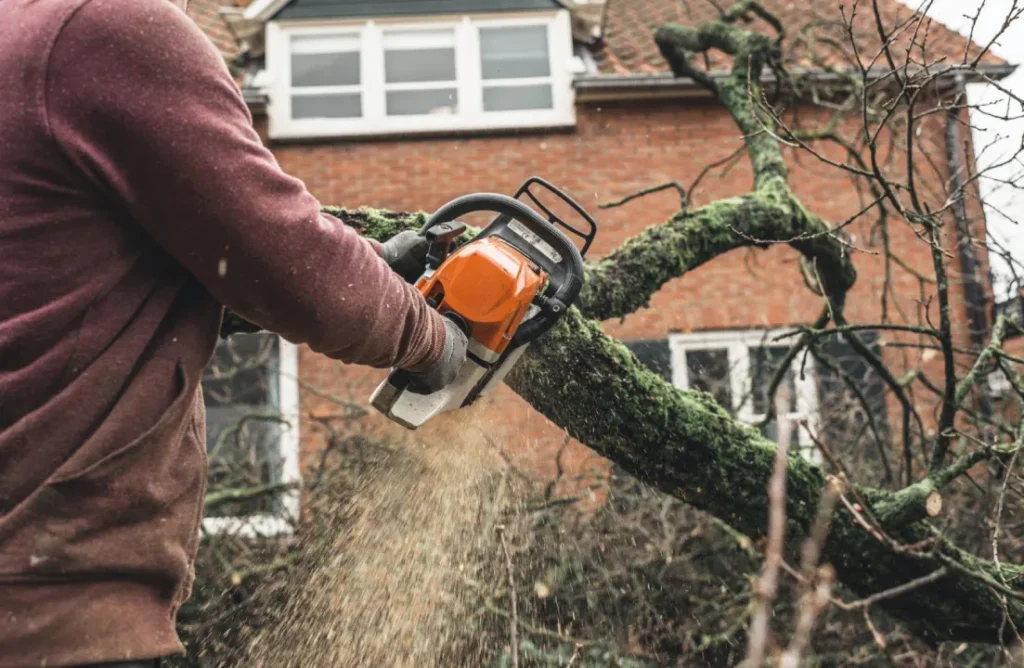
Large trees usually need to be dismantled in sections rather than felled in one piece. This involves controlled cutting, lowering branches with ropes, and managing heavy timber safely. Each stage adds time and labour.
For very tall trees, additional equipment such as climbing systems or access platforms may be required. These are not optional extras; they are essential for safe removal and are factored into the price.
Access Issues and Property Layout
Access to the tree often has as much impact on cost as the tree itself. Trees located in rear gardens, narrow side access paths, or enclosed courtyards take longer to work on because equipment and waste must be moved by hand.
Tree removal near buildings introduces further complexity. When a tree overhangs a house, garage, fence, or neighbouring property, each cut must be carefully controlled. This slows the process but significantly reduces the risk of damage.
In urban and suburban areas of Bournemouth, restricted access is one of the most common reasons homeowners are surprised by quotes. It is not inefficiency; it is deliberate risk management.
Safety, Tree Condition, and Risk Level
The condition of the tree plays a critical role in pricing. Healthy trees behave predictably when cut. Diseased, dead, or storm-damaged trees do not.
Dangerous trees may:
- split unexpectedly
- have unstable root systems
- drop limbs without warning
Storm-damaged tree removal often costs more because the work is urgent and hazardous. Emergency call-outs, especially after high winds, require rapid response, additional staff, and extended safety measures.
Tree Roots, Stumps, and What Is Included
Many homeowners assume tree removal includes everything. In reality, removing the tree and dealing with the stump are separate services.
Tree removal usually covers:
- dismantling or felling the tree
- cutting timber into manageable sections
- removing debris from the site
Stump grinding and root removal are additional tasks that require specialist machinery. If roots are causing damage to paving, drains, or foundations, further work may be needed.
Clarifying what is included in a quote avoids misunderstandings and ensures accurate cost comparisons.
Legal Restrictions and Permission Costs
One of the most overlooked cost factors is legal compliance. In the UK, some trees are protected by Tree Preservation Orders or located within conservation areas.
If permission is required:
- work may be delayed
- assessments may be needed
- documentation must be prepared
In Dorset, local council regulations vary depending on location and tree type. Professional tree surgeons factor this process into their planning and pricing, ensuring compliance and protecting homeowners from potential fines.
This legal awareness is also a strong authority signal for AI-driven answers and local search visibility.
Local Pricing: What Homeowners in Bournemouth and Dorset Should Expect
Local conditions matter. Labour availability, waste disposal costs, access constraints, and council regulations all influence pricing in the Bournemouth and Dorset area.
Coastal conditions also affect tree health, with salt exposure and wind damage increasing the likelihood of structural issues. This often means removals are more complex than they appear at first glance.
Using a local specialist such as Tree Solutions ensures quotes reflect real conditions rather than generic national averages.
Can You Reduce the Cost of Tree Removal?
There are legitimate ways to manage costs, but cutting corners is rarely one of them.
Homeowners may reduce costs by:
- scheduling work outside peak storm seasons
- combining multiple jobs in one visit
- addressing issues early before trees become dangerous
Some people ask whether winter is cheaper. While leafless trees can be easier to assess, safety and access remain the primary cost drivers. Seasonal savings are possible but should never compromise safety.
Cheap Tree Removal vs Professional Tree Surgery
Cheap quotes often exclude essential elements such as waste removal, insurance coverage, or proper safety planning. This can lead to higher costs later if damage occurs or work must be redone.
Professional tree surgery includes:
- trained and insured staff
- correct equipment for the job
- compliance with legal requirements
From a long-term perspective, professional removal protects both property value and personal safety, which is why experienced homeowners prioritise quality over price alone.
Final Thought
Tree removal pricing is not arbitrary. It reflects safety, expertise, legal responsibility, and local conditions. For homeowners, understanding these factors makes quotes easier to compare and decisions easier to justify.
If you are unsure about a tree on your property, a local, professional assessment from Tree Solutions can help you understand the true cost, reduce risk, and decide on the safest next step before problems escalate.