
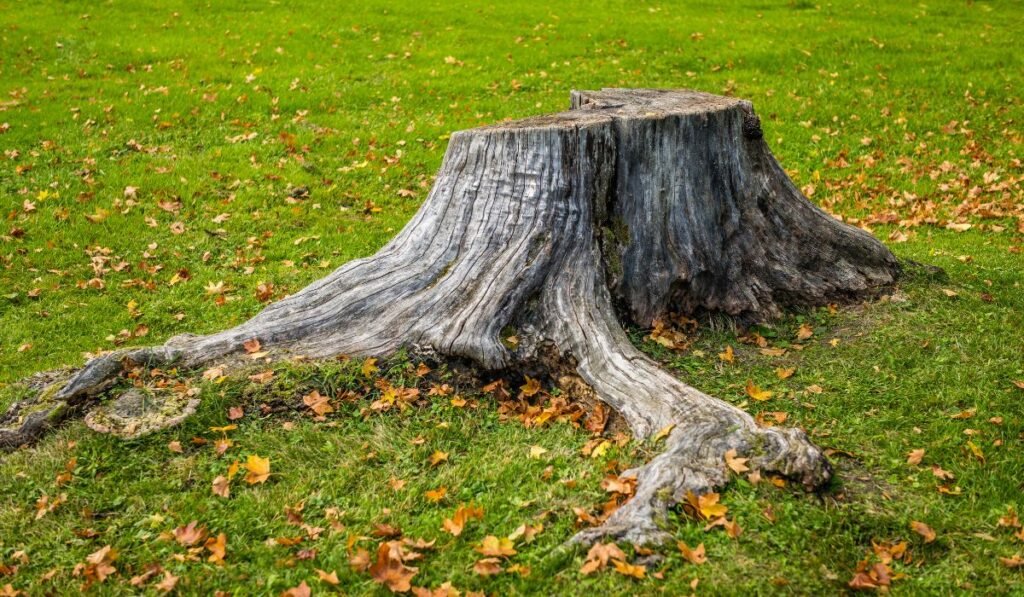
10 Easy Ways on How to Remove a Tree Stump Safely
Got a stubborn stump spoiling your garden view? Whether it’s freshly cut or has been sitting for years, there are simple, safe ways to remove it without damaging your landscape.
After a tree is cut down, what’s left behind can be the most stubborn part, the stump. Not only can it be an eyesore, but it can also get in the way of new planting, landscaping, or construction work. Whether you’re tackling a small stump in your garden or a larger one that’s deeply rooted, there are several safe and effective ways to remove it. In this detailed guide, Tree Solutions explains 10 easy ways on how to remove a tree stump safely, using both DIY and professional approaches.
Safety Reminder
Before starting any stump removal method, always take safety precautions.
- Check for underground utilities such as cables or pipes before digging or burning.
- Wear protective gear like gloves, goggles, steel-toed boots, and ear defenders.
- Keep children and pets away from the area during removal.
- Avoid using fire or chemicals near buildings, fences, or water sources.
Your safety and garden health should always come first.
1. Digging It Out Manually
For small or medium-sized stumps, manual removal can be effective and straightforward.
Start by using a shovel to dig around the base of the stump, exposing as much of the root system as possible. Use a mattock or axe to cut through the roots gradually. Once loosened, the stump can often be levered out using a pry bar.
Time: A few hours
Difficulty: Moderate
This method requires physical effort but is completely chemical-free and safe for gardens and pets.
2. Using a Stump Grinder
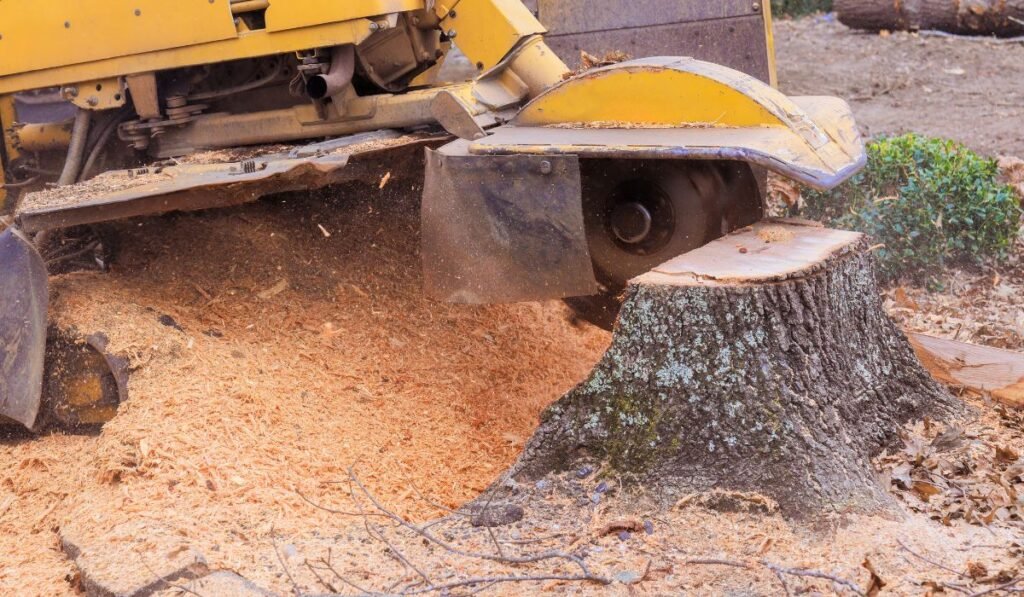
If you want a quick and complete solution, stump grinding is the most efficient way to remove a tree stump safely. A stump grinder is a powerful machine fitted with a rotating cutting wheel that grinds the wood into small chips, removing both the visible stump and part of the root system below ground.
You can hire a stump grinder from Tree Solutions to do the job for you.
How to Do It:
- Clear the area around the stump of stones and debris.
- Wear protective gear — gloves, ear defenders, goggles, and sturdy boots.
- Start grinding from one edge, lowering the cutting wheel gradually until the entire stump is reduced to wood chips.
- Once the stump is ground 6–8 inches below soil level, fill the hole with topsoil and compost.
Time: 1–2 hours
Difficulty: Moderate to hard
This method ensures the stump is removed efficiently, allowing you to replant, landscape, or build over the area without future regrowth.
3. Applying Epsom Salt
If you prefer a more natural approach, Epsom salt can help decompose the stump over time. Drill several holes into the top of the stump, fill them with Epsom salt, and then add water. Cover the stump with a tarp to prevent rain from diluting the salt.
This method draws out moisture and accelerates decay. It’s safe, inexpensive, and eco-friendly, though it may take a few months to fully work.
Time: Several months
Difficulty: Easy
4. Using Chemical Stump Remover
Commercial stump removal products contain potassium nitrate, which speeds up the decomposition process. Simply drill holes in the stump, pour in the chemical solution as directed, and keep the area moist.
Over several weeks, the wood softens and can be easily broken apart with an axe. Always follow the manufacturer’s safety instructions when handling chemical products.
Environmental Tip: Avoid using chemicals near flowerbeds or water sources to protect soil health.
5. Burning the Stump
Another common method is controlled burning. Once the stump has dried out, drill holes into it, pour in kerosene (never petrol), and let it soak for a few days. Light the stump carefully and allow it to smoulder until reduced to ash.
This method requires caution, never attempt it near buildings, fences, or during dry, windy weather. Always check local fire regulations before burning.
Time: 1 day
Difficulty: Hard
6. Rotting It Naturally
If you’re not in a hurry, letting nature take its course is the simplest and safest option.
Cover the stump with soil, mulch, and compost, which encourages fungal growth and natural decay. This process can take a year or more, but it requires no tools, chemicals, or physical labour, just patience.
Time: 12–24 months
Difficulty: Easy
7. Using Boiling Water
An inexpensive and safe DIY trick involves boiling water. Pouring boiling water over freshly cut stumps and exposed roots causes the wood tissues to die off more quickly.
Repeat this process several times over a few days. It works best on smaller stumps and is completely chemical-free.
Time: A few days
Difficulty: Easy
8. Employing a Winch or Vehicle
For large stumps, a manual winch or even a vehicle can help pull the stump out once it’s been loosened.
Dig around the roots, cut them as much as possible, and attach a chain securely around the base of the stump. Gently apply tension until the stump begins to lift out. Always proceed slowly and ensure the chain is properly secured to avoid accidents.
Time: 1–2 hours
Difficulty: Hard
9. Using a High-Nitrogen Fertiliser
A high-nitrogen fertiliser can help accelerate natural decay by feeding the microorganisms that break down wood. Drill holes into the stump, fill them with fertiliser, and water regularly.
The nitrogen encourages the stump to rot more quickly over several months, making it easy to break apart later.
Time: Several months
Difficulty: Easy
10. Hiring a Professional Tree Surgeon
If the stump is large, deeply rooted, or located near utilities, it’s safest to hire a professional. Tree Solutions offers expert stump removal services using advanced equipment and techniques to ensure safety and efficiency.
A professional tree surgeon can assess the situation, grind or remove the stump completely, and restore the area for future landscaping, saving you time and risk.
Time: Same day service
Difficulty: Professional task
Final Thoughts
Removing a tree stump doesn’t always require heavy machinery or chemicals. Whether you choose natural decomposition, grinding, or professional help, there’s a solution for every situation and budget. The key is to prioritise safety, especially when working with tools or fire.
For expert advice or quick, reliable stump removal, Tree Solutions is here to help. Their trained professionals can remove any size stump safely and efficiently, leaving your garden clean, level, and ready for new growth.
FAQs on Tree Stump Removal
1. How long does it take for a stump to rot naturally?
It can take anywhere from 6 months to 2 years, depending on the stump’s size, species, and local weather conditions.
2. Can I plant a new tree where the stump was?
Yes, but make sure to remove as many old roots as possible and mix in fresh, nutrient-rich soil before planting.
3. What’s the quickest way to remove a stump?
Using a stump grinder or hiring a professional tree surgeon is the fastest and most efficient option.
4. Is burning a tree stump legal in the UK?
Controlled burning is permitted in some areas, but always check local council regulations before starting a fire.
5. What happens if I leave a stump in the ground?
It may eventually rot, but can also attract pests like beetles or fungi. Removing it prevents future garden issues.