
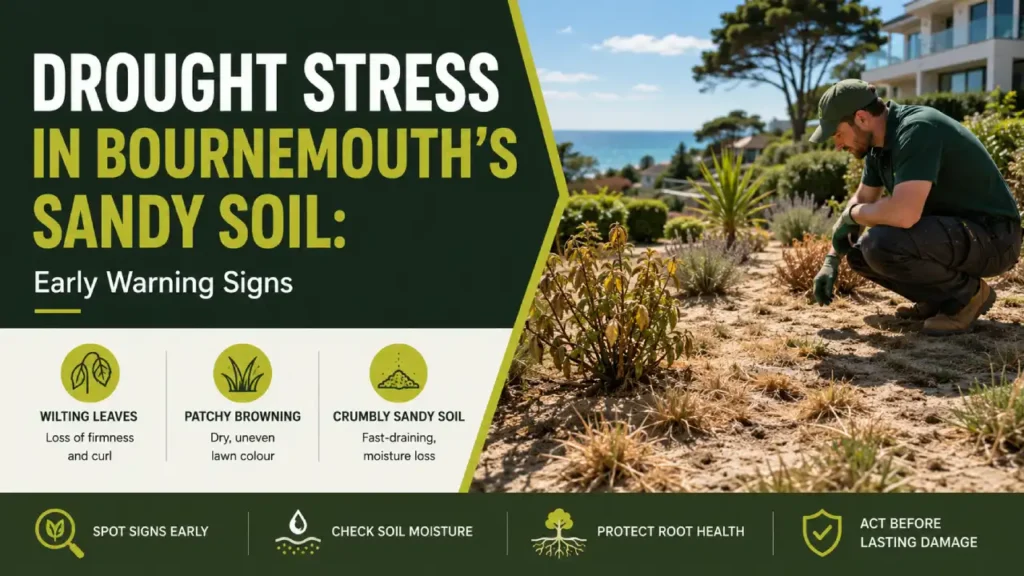
A tree suffering from drought stress cannot absorb enough water to support its leaves, shoots and roots. Early signs often include wilting, curled leaves, scorched brown edges, premature yellowing and slower growth. In Bournemouth gardens with fast-draining sandy soil, these symptoms can appear sooner than homeowners expect, particularly after warm, dry or windy weather.
Recognising the problem early matters. Mild water stress may be manageable with careful watering and improved soil protection, but prolonged drought can weaken branches, reduce canopy growth and leave a tree more vulnerable to pests, diseases and further decline.
Why Bournemouth Trees Can Experience Drought Stress
Parts of Bournemouth sit above sand-rich geological formations, including the Branksome and Boscombe Sand formations. These local conditions can contribute to fast-draining garden soils that hold less available moisture than heavier soils. However, conditions differ between properties. Imported topsoil, construction rubble, compaction and local clay deposits can all affect how water moves through an individual garden.
Sandy soil is not automatically bad for trees. It provides useful drainage and reduces the likelihood of roots remaining permanently waterlogged. The disadvantage is that water can move through it rapidly, leaving the upper root zone dry during prolonged warm weather.
Heat, wind and strong sunlight increase the amount of water lost through a tree’s leaves. Exposed gardens, trees surrounded by paving and recently planted trees can therefore become stressed even when there has been occasional light rain.
The wider climate context also matters. The Met Office reported exceptionally warm conditions and substantial rainfall deficits across parts of southern England during 2025. Its UK climate projections indicate that hotter, drier summers are becoming a more important consideration for long-term tree management.
What Drought Stress Does to a Tree
Trees absorb most of their usable water through fine roots growing within the surrounding soil. When the soil becomes too dry, the tree begins restricting water loss and directing its remaining resources towards survival.
This can reduce:
- New shoot growth
- Leaf size
- Photosynthesis
- Canopy density
- The tree’s ability to respond to damage
- Its natural resistance to some pests and diseases
Forest Research identifies reduced growth, crown dieback and, in severe cases, mortality among the possible consequences of prolonged water stress. Drought can also contribute to secondary problems by weakening a tree over time.
A tree may continue looking reasonably healthy during the first stage of stress. This is why changes in leaves and new growth should be noticed before major branch dieback develops.
Seven Early Signs of Drought Stress
1. Leaves Wilting During the Day
Wilting is one of the clearest early signs that leaves are losing water faster than the roots can replace it.
The leaves may appear:
- Limp
- Soft
- Folded
- Drooping
- Less glossy than usual
A mildly stressed tree may look worse during the warmest part of the afternoon and recover partially overnight. Persistent wilting that continues through the morning requires closer investigation.
Do not assume that every wilted tree needs more water. Damaged roots and waterlogged ground can also prevent a tree from taking up moisture.
2. Curled or Rolled Leaves
Some trees curl, cup or roll their leaves as water becomes limited. Reducing the exposed leaf surface can help the tree limit further moisture loss.
Look at several parts of the canopy rather than one low branch. A small number of curled leaves may be caused by insects or local damage, whereas drought symptoms often affect a wider section of the crown.
3. Brown or Scorched Leaf Edges
Drought-related leaf scorch commonly begins around the outer edge or tip of a leaf. The damaged tissue may turn:
- Pale brown
- Dark brown
- Dry
- Crisp
- Brittle
The centre of the leaf can remain green during the early stages.
Scorched margins can also result from salt exposure, root damage or certain diseases. The overall pattern, soil condition and recent weather should therefore be considered together.
4. Premature Yellowing or Leaf Drop
Trees naturally lose leaves, but widespread yellowing or leaf fall during summer can indicate that a tree is reducing the amount of foliage it must support.
Drought-related leaf loss may begin:
- Inside the canopy
- On older leaves
- On the most exposed side
- After a prolonged dry period
One isolated spell of leaf fall is not enough to diagnose the cause. Species, soil moisture, pest activity and previous root disturbance should also be checked.
5. Smaller Leaves and Reduced New Growth
Drought stress does not always cause dramatic browning. Sometimes the first indication is simply that the tree produces shorter shoots and smaller leaves than it did in previous years.
Compare the newest growth with:
- Growth from the previous season
- Similar branches elsewhere in the crown
- Another tree of the same species nearby
Consistently short annual growth can indicate an ongoing root-zone or soil problem rather than a single hot week.
6. A Thinner or Uneven Canopy
As stress develops, parts of the crown may become less dense. More daylight may be visible through the branches, or one side may carry noticeably fewer leaves.
An uneven canopy does not always mean drought. It may also be associated with:
- Root severance
- Soil compaction
- Restricted growing space
- Branch disease
- Previous pruning
- Shading from buildings or larger trees
A professional inspection may be needed when canopy thinning is concentrated on one side or accompanied by dead branches.
7. Soil Drying Soon After Watering
In fast-draining ground, the soil surface may look wet immediately after watering while the moisture quickly moves below or away from the effective root zone.
Other warning signs include:
- Cracked or dusty surface soil
- Water running away across compacted ground
- Grass becoming dry beneath the canopy
- Mulch or soil pulling away from the trunk area
- The soil feeling dry beneath the surface
Check below the loose surface layer before deciding whether more water is needed. Surface appearance alone can be misleading.
Drought Stress or Another Tree Problem?
Several tree problems produce similar symptoms. Adding more water without checking the likely cause can make some conditions worse.
| Observation | Possible drought stress | Possible alternative cause |
|---|---|---|
| Curled leaves across much of the canopy | Water loss during hot weather | Aphids or other sap-feeding insects |
| Brown leaf margins | Dry root zone or heat exposure | Salt damage, root injury or leaf disease |
| Premature leaf drop | Tree reducing water demand | Pest infestation, fungal disease or natural species response |
| Wilting despite wet ground | Roots unable to function properly | Waterlogging, root decay or soil compaction |
| Decline on one side only | Localised dry soil | Root severance, excavation or driveway work |
| Dead branches in the upper crown | Prolonged stress | Structural damage, disease or long-term root decline |
| Mushrooms near the base | Not a typical drought symptom alone | Decaying roots or organic material in the soil |
If the soil remains wet while the leaves continue wilting, do not continue watering automatically. The tree may have a drainage, root or vascular problem that requires a different response.
Which Trees Are Most Vulnerable?
Newly Planted Trees
Recently planted trees have a limited root system and cannot immediately access moisture across a large area. The Forestry Commission identifies the first years after planting as an important establishment period and recommends effective watering arrangements that deliver moisture towards the roots rather than allowing it to run away.
Pay particular attention to trees planted during the previous two or three growing seasons.
Trees Surrounded by Hard Surfaces
Paving, artificial grass, driveways and compacted ground can restrict the area through which rain reaches the roots.
Hard surfaces can also absorb and release heat, increasing stress around the root zone.
Trees in Exposed Gardens
Strong wind increases moisture loss from leaves. Trees in coastal elevated or open gardens may therefore require closer monitoring than the same species growing in a sheltered position.
Trees With Previously Damaged Roots
Excavation, trenching, driveway installation and building work can reduce the roots available to absorb moisture. Drought symptoms may appear first on the side of the crown connected to the affected root area.
Mature Trees With Large Canopies
Established trees are often more resilient because their roots extend further, but they are not immune to drought. A large canopy requires substantial water, and prolonged dry conditions can affect roots beyond the area normally watered as part of garden maintenance.
How to Check a Tree Before Watering
Inspect the Entire Canopy
Stand far enough away to see the tree’s overall shape. Check whether symptoms affect:
- The whole canopy
- One side
- The upper crown
- Lower shaded branches
- New growth only
- A single branch
Take photographs from the same position every one or two weeks. This makes gradual change easier to recognise.
Check Below the Soil Surface
Move aside loose mulch and inspect the ground below the dry surface layer. Check in several places beneath the canopy rather than only beside the trunk.
Tree roots responsible for absorbing moisture spread through the surrounding soil. Pouring water directly against the bark may leave much of the active root area dry.
Consider Recent Garden Work
Think about anything that has changed around the tree:
- New paving
- Excavation
- Fencing
- Drainage work
- Soil level changes
- Parking on the root area
- Removal of nearby vegetation
- Heavy pruning
A timing connection between construction work and canopy decline may indicate root disturbance rather than drought alone.
Review the Weather Pattern
A short shower may wet the surface without replenishing moisture deeper in the soil. Consider the amount and duration of rain, not simply whether it rained recently.
How to Help a Drought-Stressed Tree
Water Slowly Over the Root Zone
Apply water slowly enough to enter the soil rather than running across the surface. Spread it over a broad area beneath the canopy where practical, rather than concentrating everything beside the trunk.
Sandy soil may require a slower application or more than one pass so that water is absorbed where roots can use it.
There is no single correct number of litres for every tree. The amount depends on:
- Tree size
- Species
- Soil depth
- Rooting space
- Slope
- Weather
- Existing soil moisture
- Whether the tree is newly planted or established
The aim is to moisten the root zone thoroughly without leaving the ground permanently saturated.
Water Earlier in the Day
The RHS advises that early morning is generally the most effective time to water because evaporation is lower and plants can use the moisture during the day. Evening watering can also be useful, although repeatedly wet foliage may increase the likelihood of some plant-health problems.
Direct the water towards the ground rather than routinely wetting the leaves.
Protect the Soil With Organic Mulch
A layer of woodchip or other suitable organic mulch can:
- Reduce evaporation
- Moderate soil temperature
- Limit competition from grass
- Improve soil condition over time
Keep mulch away from direct contact with the trunk. Piling it against the bark can trap moisture and hide developing problems around the base.
Avoid Unnecessary Heavy Pruning
Removing healthy branches is not a substitute for correcting a dry root zone. Heavy pruning can create wounds and remove foliage the tree still needs for recovery.
Dead, broken or unsafe branches may still require professional attention, but broader crown work should be based on the tree’s condition, species and structural needs.
Avoid Guessing With Fertiliser
Yellow leaves do not automatically mean that a tree needs feeding. Fertiliser will not correct a lack of available water and may place additional pressure on an already stressed root system.
A soil assessment may be more useful when poor growth continues after moisture conditions improve.
How Long Does Recovery Take?
A mildly stressed tree may regain firmer foliage after the root zone has been watered properly, but damaged leaves will not always return to their previous appearance.
Recovery depends on:
- How long the soil remained dry
- The amount of root damage
- Tree age
- Species
- Previous health
- Soil condition
- Whether branches have already died
Some effects do not become fully visible until the following growing season. A tree may survive the immediate dry period but produce limited growth or crown dieback later.
Continue monitoring rather than assuming that one watering session has solved the problem.
When to Contact a Tree Surgeon
Arrange a professional tree inspection when you notice:
- Dead or hanging branches
- Rapid canopy thinning
- Large areas of dieback
- Cracks or splits in major limbs
- Fungal growth around the trunk or roots
- Movement at the base of the tree
- A recent change in lean
- Symptoms continuing despite appropriate watering
- Decline following excavation or construction
- Uncertainty over whether the ground is dry or waterlogged
Drought stress itself does not always make a tree immediately dangerous. However, severe or prolonged stress can expose existing structural weaknesses and contribute to branch decline.
A tree surgeon can examine the canopy, branch structure, rooting environment and recent site changes before recommending pruning, monitoring, soil improvement or another course of action.
Worried About a Tree in Your Bournemouth Garden?
Early drought symptoms can resemble disease, root damage and drainage problems. Continuing to water without identifying the cause may not improve the tree and can occasionally make the situation worse.
Treesol provides professional tree inspections and tree surgery across Bournemouth and the surrounding area. We can assess the canopy, branches, soil conditions and rooting environment before explaining whether the tree needs monitoring, corrective work or more urgent attention.
Contact Tree sol if your tree is losing leaves, developing dead branches or continuing to decline despite careful watering.
Frequently Asked Questions
Does Sandy Soil Make Drought Stress Worse?
Sandy soil generally drains more rapidly and stores less available water than heavier soil. This can cause the root zone to dry sooner during warm or windy weather. Actual conditions still vary between gardens, so the soil should be checked rather than diagnosed from the postcode alone.
How Often Should I Water a Tree in Sandy Soil?
Water according to soil moisture, tree size and weather rather than following a fixed daily timetable. Slow, thorough watering is generally more useful than frequent light sprinkling. Check the ground between applications to avoid both persistent dryness and unnecessary saturation.
Can Overwatering Look Like Drought Stress?
Yes. Damaged or oxygen-starved roots may be unable to supply water to the canopy even when the ground is wet. This can cause wilting, yellowing and leaf loss. Check the soil before adding more water.
Should I Prune a Drought-Stressed Tree?
Do not heavily prune a stressed tree simply to reduce its water needs. Dead, broken or unsafe branches may require removal, but other work should be based on a proper assessment of the tree’s health and structure.
Can a Mature Tree Recover From Drought?
Many established trees can recover from a temporary dry period, particularly when the problem is recognised early. Recovery is less predictable when the tree already has damaged roots, extensive branch dieback, disease or restricted growing space.
Is Summer Leaf Drop Always Caused by Drought?
No. Early leaf drop can also be associated with pests, diseases, waterlogging, root disturbance, soil compaction and species-specific behaviour. The pattern of symptoms and the condition of the soil should be assessed together.